Why Chess Should Be Part of Every Homeschool Curriculum
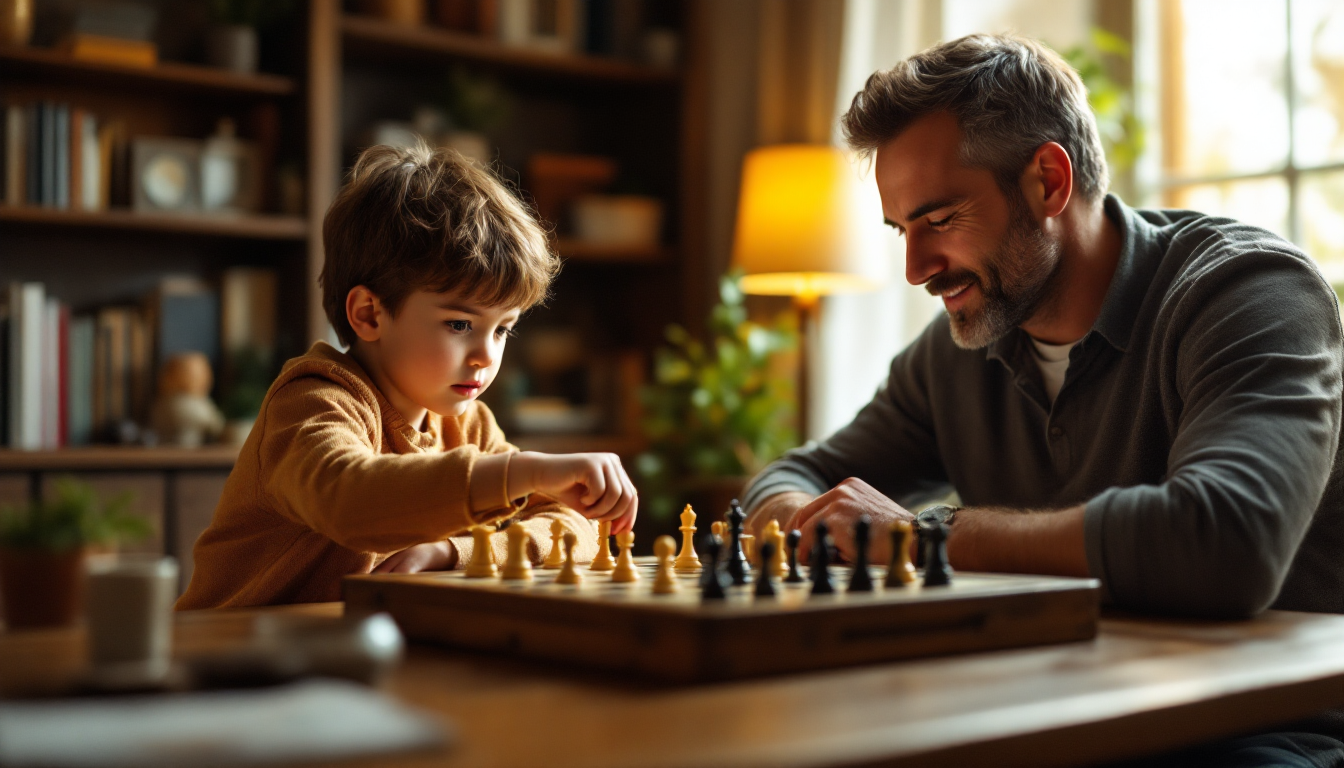
Chess is a 30-minute weekly investment in how your child thinks. Here's why it belongs in your homeschool, and how to start without knowing how to play yourself.
Chess has been used to teach thinking for over 1,500 years. Kings studied it. Generals played it. Scientists and philosophers kept a board nearby, not because they loved the game but because it sharpened something in them that nothing else could. And yet most homeschool families, us included for years, treat chess as optional enrichment. Something you pull out on a rainy afternoon. A game, not a tool.
I changed my mind the first time I sat down to play chess with my oldest son. I expected to have to explain every rule, to slow down and repeat myself, to basically teach a strategy game to a kid who had never thought strategically. What surprised me was that he didn't need me to tell him what to think. He needed me to give him a situation where he had to think for himself. Chess did that. After twenty minutes, he had stopped just moving pieces. He was studying the board, going quiet, then making a choice he could explain. I hadn't seen that kind of deliberate reasoning from him in any textbook exercise. That's when I stopped treating chess as a game.
What Chess Actually Teaches
It is not memorization. There is no formula to plug in. Chess is not even primarily about knowing which piece moves which way. A child learns that in twenty minutes. What takes years to develop is pattern recognition, consequence thinking, and the ability to hold a plan loosely while the situation changes around you. Those are not chess skills. They are life skills. Chess just happens to be one of the most efficient environments for building them.
There is also no luck. Every outcome traces back to a decision. That is a hard lesson to learn, and a harder one to teach, but chess makes it undeniable. The board does not lie. Here is what regular chess practice actually builds in your kids:
- Forward thinking. Seeing two or three moves ahead, not just reacting to what's in front of you.
- Strategic sacrifice. Giving up something small to gain something bigger, a concept that maps directly to real decision-making.
- Losing gracefully. Treating failure as data, not disaster. Every loss has something to teach if you're willing to look.
- Reading your opponent. Anticipating how another person thinks, which is the foundation of empathy, negotiation, and leadership.
The Faith Angle Nobody Talks About
Chess is a game of stewardship. Every piece has value, even the pawn. How you use what you've been given determines the outcome. A reckless player who throws pieces away carelessly does not lose because they had bad pieces. They lose because they did not steward what they had. That is a lesson straight out of Scripture, and chess makes it concrete in a way that a lecture never could.
Proverbs 16:9 says, "In their hearts humans plan their course, but the Lord establishes their steps." Chess lives in that tension. You plan carefully, you think ahead, you execute faithfully, and then your opponent makes a move you did not expect, and you have to adapt. The outcome is never fully yours to control. Teaching kids to plan excellently while holding outcomes loosely is one of the most important things we can do. Chess, played regularly, makes that posture second nature.
How to Get Started (Even If You Don't Know How to Play)
You do not need to be a chess player to introduce chess to your kids. You just need to be willing to sit down and figure it out alongside them. The rules take about twenty minutes to learn. The strategy takes a lifetime, and that's the point.
For online play, we recommend starting with ChessKid. It is the safest, most kid-friendly chess platform out there. ChessKid is Chess.com's dedicated platform for players under 18. It is safe, structured, genuinely fun, and packed with puzzles and lessons at every level. Unlike general chess apps, it is designed specifically for young learners, with age-appropriate content and strong privacy controls.
The most important thing is to play with them. Not to teach at them. Not to correct every mistake in real time. Just play. Let them feel the tension of decision-making. Let them win sometimes. Let them lose sometimes. Be curious together about what happened after the game is over. That is the curriculum.
Chess as Weekly Curriculum
Here is the simplest version of a chess curriculum that actually works. Two to three sessions per week, twenty to thirty minutes each. Session one is puzzles. ChessKid has thousands of them, organized by difficulty, and kids can work through them independently. Session two is a full game against a parent or sibling. Session three is a review. Pull up a game from the week and ask two questions. What was your best move? What would you do differently? That's it. No textbook. No lesson plan. Just chess, played with intention.
The review session is the most underrated part. Asking a child to narrate their own thinking, to explain why they made the choices they made and what they would change, is metacognition. It is the skill of thinking about thinking. That translates directly to how kids approach writing, math, science, and every other subject. Chess just makes it feel like a game.
Chess and Game Theory: The Connection
Chess is game theory made physical. Every move is a decision under incomplete information. You can see your opponent's pieces, but not their intentions. You have to reason about what they are likely to do, weigh the expected value of your options, and commit to a choice without certainty. That is not just chess. That is economics, negotiation, and strategic thinking in every field. If you want to read our post on why board games are serious education, the chess and game theory connection is front and center.
If your kids love chess, they will thrive in our Logic & Philosophy: Game Theory module, and vice versa. The module picks up exactly where chess leaves off: formal reasoning, decision trees, and the mathematics of strategy. Kids who have been playing chess regularly find the concepts click faster and stick longer.
Recommended Chess Sets
For physical play, you do not need anything fancy. A basic standard Staunton chess set runs $15 to $25 on Amazon and will last for years. Look for weighted pieces and a felt or roll-up board. That is genuinely all you need to build a serious chess habit. Skip the sets with built-in computers or electronic boards. They add novelty but reduce the focus that makes chess valuable.
Start Simple. Then Go Deep.
Chess alone is great. It will sharpen your kids in ways that spill into every other subject. But paired with a structured game theory curriculum, it is transformative, because now your kids have language for what they have been doing intuitively. They can name the concepts, apply them to new problems, and reason explicitly about strategy. Try our free Game Theory lesson first and see if it clicks. Then browse all curriculum tracks to see where chess fits in the broader learning arc we've built.